Decorative Tree — Pale Pink Chip-Style Leaves, Twisted Gold-Tone Branches & Cream Rounded Pot for Romantic Tabletop Displays
Decorative Tree — Pale Pink Chip-Style Leaves, Twisted Gold-Tone Branches & Cream Rounded Pot for Romantic Tabletop Displays
Couldn't load pickup availability
THE DECORATIVE TREE / A LITTLE GARDEN OF DETAILS
🌸 Some Gardens Belong on Your Favorite Table.
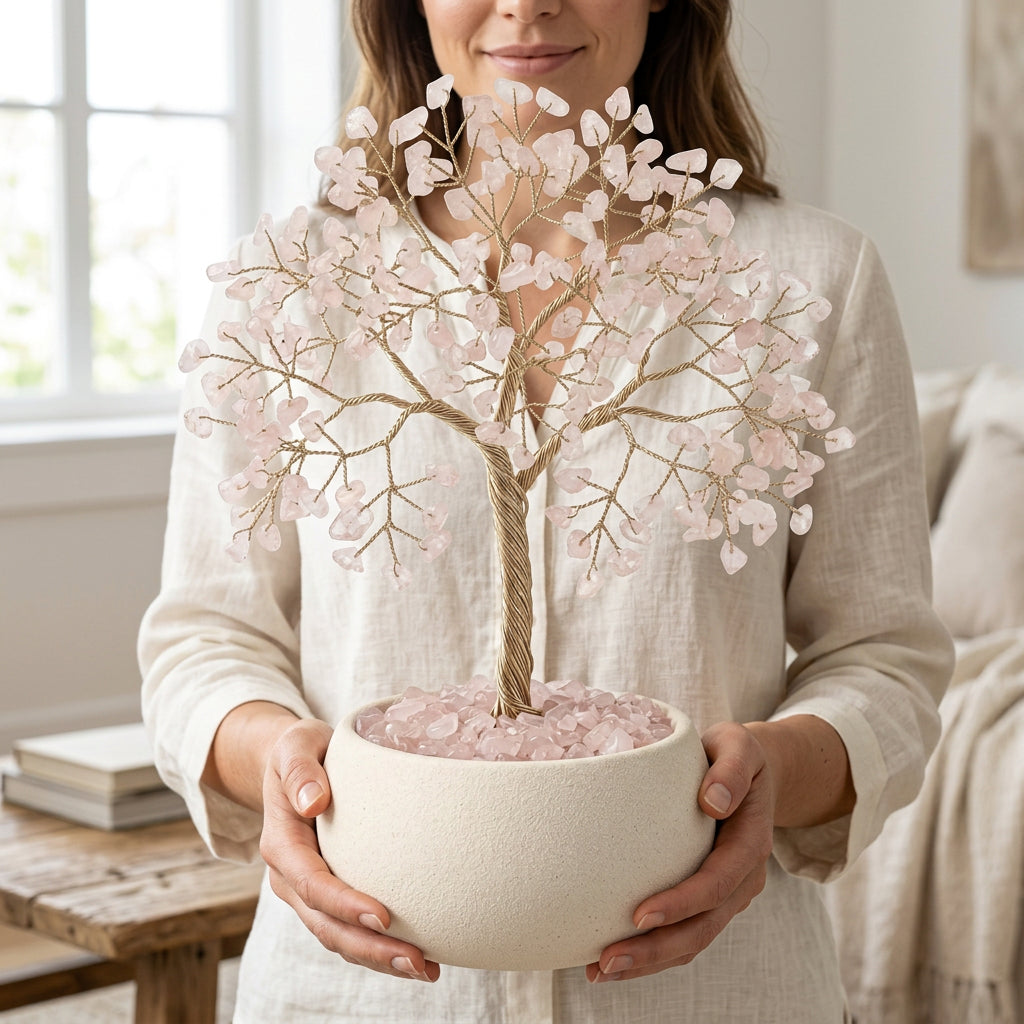
A branching silhouette, a cloud of pale pink details, and a softly rounded cream-colored pot. The decorative tree reimagines the outline of a tree as a decorative tabletop composition, bringing a botanical reference into the room through color, texture, and finely drawn lines rather than green foliage.
Its character comes from contrast. The trunk has a visibly twisted, gold-tone appearance, while the finer branches spread into an open canopy. Irregular pink chip-style accents gather at their tips, creating a light-looking crown with space between each small cluster. Below, matching pink pieces cover the visible surface inside the pot, connecting the upper branches to the base.
A little romantic. A little unexpected. A thoughtful accent for a room that could use a softer color story.

From the Pot Up: A Composition That Feels Complete
Start at the foundation. The pot has a wide, rounded body and a pale cream appearance, giving the branching form above a quieter visual anchor. Its relatively simple shape keeps the display from feeling elaborate at every level. The fine surface texture visible in the photographs introduces detail without a strong pattern.
Inside the rim, pink chip-style pieces form a decorative top layer. Repeating the canopy's color here is a small but effective choice: it gives the composition continuity rather than making the tree and pot feel like unrelated parts. The warmer trunk rises from this pink field, leading the eye upward into the branches.
The pot's fullness also contrasts with the airy crown. One part is visually contained and rounded; the other reaches outward through many finer lines. Together, they create a recognizable tree-like silhouette with a distinctive decorative point of view.
💮 At Branch Level, the Small Differences Matter
The pink accents are not uniform circles or identical leaf shapes. In the close-up, their outlines vary: some are narrower, some broader, and some catch brighter highlights along their edges. That irregularity gives the canopy a more varied appearance than a repeated geometric pattern.
Their pale blush tone is equally important. It introduces color without forming a dense, saturated block. Areas of lighter and slightly deeper pink appear across the photographed canopy, while the spaces between the branches allow the backdrop to remain visible.
The gold-tone branch structure provides the connecting line. Several fine twisted-looking strands divide and extend outward, holding small groups of accents at different positions. The result is intricate at close range but still readable as one rounded crown from farther away.

Botanical in outline, decorative in detail, and entirely its own kind of pink.
The Golden Thread Through the Design
The decorative tree's trunk is more than a line connecting the pot and canopy. Its visible spiraling texture gives the central structure a decorative role of its own. As the trunk divides, that same twisted appearance continues into the larger branches and then into finer offshoots.
This repeated texture creates a visual thread through the entire upper form. It also keeps the warm accent distributed across the composition rather than limiting it to one isolated detail. The gold tone remains visible between the pink pieces, giving the canopy definition against a light background.
That relationship is useful when planning a room scheme. The blush accents can connect with softer colors, while the trunk and branches relate to warmer wood tones, tan accessories, or a restrained gold-tone detail elsewhere. You can emphasize either side of the palette without changing the object itself.
🍑 Three Color Notes to Build Around
Blush pink: a gentle accent for a neutral room, best given a little space rather than surrounded by many competing pink objects.
Warm gold tone: a connecting note beside honey-colored wood, tan textiles, or small metallic-looking accessories.
Cream: a quieter foundation that works visually with ivory upholstery, oatmeal fabrics, and pale backdrops.
🪷 A Tabletop Scene with a Softer Center
The lifestyle photograph pairs the decorative tree with a pale table and cream seating. The room's restrained palette allows the pink canopy to become a clear focal point, while the pot relates to the surrounding lighter surfaces. The open branch structure adds detail without turning the whole display into a solid block of color.
To borrow the approach, begin with a secure area large enough for both the pot and the full branch span. Give the crown clearance from nearby objects, and keep frequently handled items in their own space so reaching for them does not disturb the finer branches.
Then edit the surrounding accessories. A low book or a simple dish can provide a different shape without competing with the canopy. Avoid surrounding the tree with several equally detailed ornaments unless you deliberately want a fuller, more collected arrangement.

A Different Setting, a Different Story
The romantic corner, without the excess
Pair the decorative tree with ivory and muted rose tones, keeping the rest of the display relatively simple. The fine branch detail already supplies plenty of visual interest, so a plain backdrop can be more effective than a highly patterned one. One warmer accent nearby can connect with the trunk without making the arrangement feel overly matched.
The warm neutral living room
Use the pink canopy as a small departure from an otherwise beige, cream, and wood-toned scheme. This direction lets the color feel intentional without requiring a room-wide redesign. A single related blush note in a cushion or artwork can provide enough continuity.
The personal workspace
A decorative tree can introduce a more organic outline beside rectangular screens and notebooks. Choose a place outside the main work area, with enough clearance for the branches. Let practical desk tools remain easy to reach, and give the decorative piece its own undisturbed position.
🎀 When a Small Object Becomes Personal
Imagine a quiet morning at home. The room is familiar, the table is clear, and the pale pink canopy adds one gentle point of color to the view. Up close, you notice the little changes between the chip-style accents. From your chair, you see the broader tree-like outline and the warm branching lines beneath it.
The decorative tree can be enjoyed simply for that visual character. If the tree shape suggests growth, connection, or a fresh beginning to you, it can carry that personal meaning too. Those associations are yours to give it, not promises of luck, wellbeing, or any special effect.
As a gift idea for someone who enjoys blush palettes and botanical-inspired décor, the design offers a clear visual theme. Check the confirmed dimensions and packaging details before choosing it for a particular space or occasion, rather than assuming gift wrapping or a presentation box is supplied.
Before You Find Its Place
- Measure the full outline. Confirm total height, widest branch span, and pot dimensions. Lifestyle photographs show styling ideas rather than exact scale.
- Check material information. The pale pink pieces are described by appearance only. The images do not establish natural rose quartz, gemstone authenticity, metal type, pot composition, or a handmade production process.
- Do not assume adjustable branches. Follow the supplied setup guidance; the photographs do not establish that bending or reshaping is intended.
- Handle from a supported base. Avoid lifting by the fine branches or decorative pieces. Follow the verified handling instructions when moving the arrangement.
- Choose a safe position. Keep away from edges, heat sources, and busy areas. Display out of reach of children and pets, since small decorative elements and fine projecting branches are not toys.
- Use the specified care method. Check the confirmed material and cleaning guidance before applying water, brushes, or cleaning products.
This is a decorative tree-form object, not a living plant. No gemstone, therapeutic, spiritual, or financial benefit is implied. Colors can vary with screen settings and lighting; furniture and accessories in room scenes are styling references.
Let a Little Blush Take Root in Your Room.
The decorative tree brings together an open canopy of pale pink accents, a warm twisted-looking branch structure, and a simple cream pot. The details feel intricate up close, while the overall silhouette remains gentle and easy to recognize.
Choose the decorative tree and give a favorite surface a softer, more personal focal point.